


Battery Warranty Transfer: Used EV Buyer’s Guide
Learn how battery warranty transfer works on used EVs in India, what buyers must check, and how it protects future ownership value.
What Is Battery Warranty Transfer in Electric Vehicles?
The battery is usually the most valuable component in an electric vehicle. Its warranty can protect the next owner from certain battery defects, capacity loss, or eligible pack failures. During a used EV sale, the key question is whether this protection transfers to the new owner.
Battery warranty transfer matters because ownership transfer and warranty transfer are separate checks. A buyer may complete the vehicle purchase but still miss the manufacturer-required warranty update. That gap can turn a future battery issue into a personal cost.
TL;DR
|
What does battery warranty transfer mean?
Battery warranty transfer means the remaining battery warranty can continue after the EV is sold. The new owner may receive protection for eligible battery defects or capacity loss. The cover still follows the original warranty terms, including time and kilometre limits and exclusions.
- Coverage continuity: Battery warranty transfer keeps eligible battery protection active after resale. It does not create a new warranty period, and the second owner usually receives only the remaining cover.
- Manufacturer recognition: The manufacturer or authorised service network must recognise the new owner for future claims. This may need updated ownership records, warranty documents, service history, and transfer confirmation.
- Battery-specific protection: Battery warranty transfer usually applies to the battery pack and related covered components. It should not be confused with the general vehicle warranty, which may follow different rules.
- Financial exposure: A failed warranty transfer can leave the buyer responsible for future battery repair or replacement costs. This is why buyers should confirm transfer status before completing payment.
How is battery warranty transfer different from vehicle ownership transfer?
Battery warranty transfer and vehicle ownership transfer are connected, but they serve different purposes. Vehicle ownership transfer updates legal ownership records. Battery warranty transfer confirms whether the manufacturer will recognise the new owner for eligible battery warranty claims.
Difference | Battery warranty transfer | Vehicle ownership transfer |
Main purpose | Continues eligible battery warranty protection. | Updates legal ownership of the vehicle. |
Managed by | Manufacturer or authorised service network. | RTO process and registration records. |
Key risk | Buyer may lose future claim support. | Buyer may lack legal ownership proof. |
Documents needed | Warranty records, service history, transfer proof. | RC transfer papers, sale forms, KYC. |
Used EV value | Supports battery risk confidence. | Supports lawful vehicle possession. |
What are the key terms related to EV battery warranties in India?
EV battery warranties usually define the covered period, kilometre limit, capacity threshold, service conditions, and exclusions. Buyers should read these terms before trusting seller claims. The warranty may look active on paper, but claim eligibility depends on how the EV was used and maintained.
- Time and kilometre limits: Battery warranties usually run for a fixed number of years or kilometres. A second owner receives only the remaining cover, provided the transfer rules and usage conditions are satisfied.
- Capacity retention threshold: Many battery warranties define a minimum capacity level during the covered period. A claim for range loss may need diagnostic proof that the pack has fallen below that threshold.
- Exclusion conditions: Warranty terms can exclude accident damage, unauthorised repairs, improper charging, or battery tampering. Buyers should review service records carefully before assuming the warranty remains valid.
- Service history requirement: Manufacturers may require scheduled service through authorised centres. Missed service entries can weaken future warranty claims, even when ownership transfer has been completed correctly.
- Network support: Warranty support depends on the manufacturer’s service process and local network access. Buyers moving cities should confirm that authorised battery support remains available where they plan to use the EV.
Does the EV battery warranty automatically transfer to the second owner?
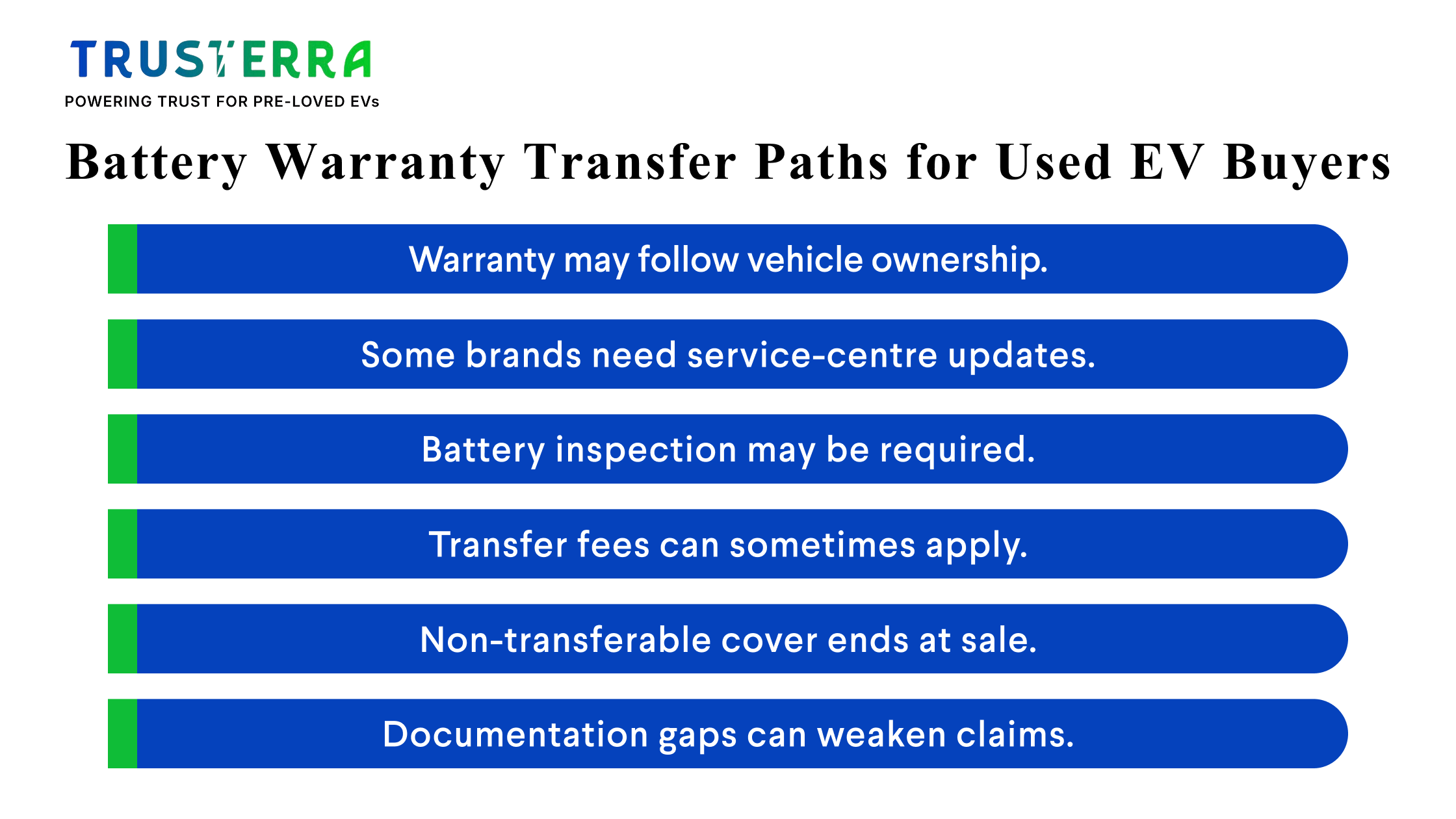
Battery warranty transfer does not work the same way for every EV. Some manufacturers allow the warranty to transfer with the vehicle after an ownership change. Others may require paperwork, inspection, service-centre confirmation, or a formal update in the new owner’s name.
The safest approach is to treat warranty transfer as a separate verification step. A seller’s verbal assurance does not prove that the manufacturer will accept future claims. Buyers should ask the authorised service centre to confirm the transfer status before making the final payment.
- Vehicle-linked transfer: Some warranties may follow the EV if the legal ownership transfer is complete. Buyers should still get written confirmation because future claims depend on manufacturer records.
- Document-based transfer: Many transfer processes need RC proof, sale documents, warranty records, and service history. These documents help the manufacturer update the new owner’s details.
- Inspection-based transfer: Some brands or cases may require a battery health inspection during transfer. This creates a condition record that can support or clarify future claims.
- Process-fee transfer: Certain manufacturers or programmes may charge a small processing fee for ownership or warranty updates. Buyers should confirm the fee and collect acknowledgement after completion.
What documents does a buyer need for battery warranty transfer?
A successful battery warranty transfer depends on complete documents at the time of sale. Missing paperwork can delay the process or limit future access to claims. Buyers should collect ownership records, proof of warranty, service history, and evidence of battery condition before accepting delivery.
- Warranty policy record: The warranty booklet or digital warranty record shows cover terms, start date, and applicable limits. Buyers should match the vehicle identification details with the EV being purchased.
- Authorised service history: Service records show whether the EV followed manufacturer maintenance requirements. These records are important because gaps can create claim issues during the remaining warranty period.
- Ownership transfer proof: RC transfer papers, Invoice, and required forms establish the new owner’s legal link to the vehicle. Manufacturers may need these records to update warranty ownership.
- Battery health report: A battery health report documents the pack’s condition at handover. It gives buyers a reference point if a dispute over capacity or performance arises later.
What common issues can impact battery warranty transfer?
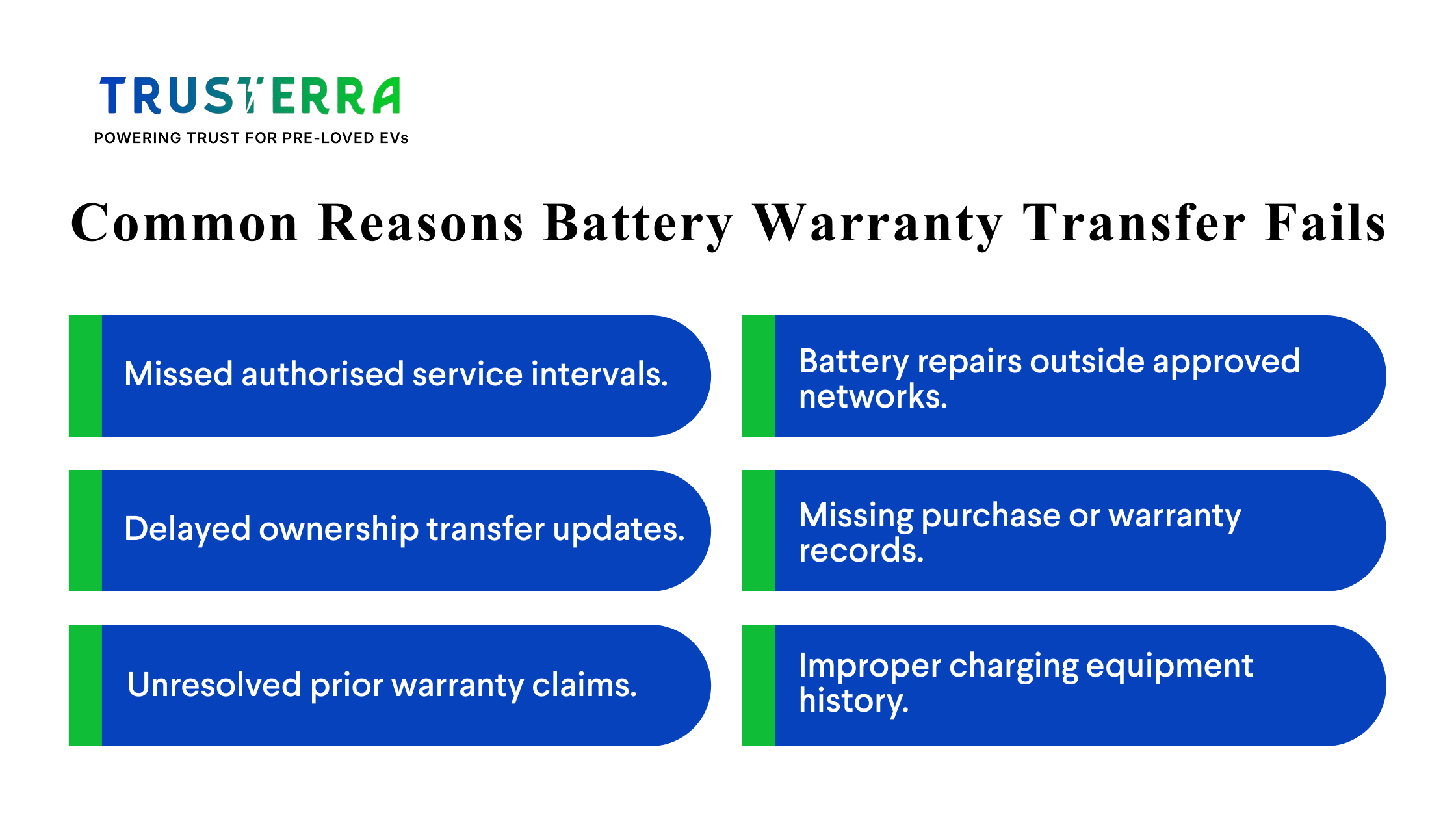
Battery warranty transfer can fail due to missing documents, delayed updates, unauthorised repairs, or a broken service history. These issues can appear even when the buyer and seller act in good faith. A careful pre-purchase check reduces the risk of losing future warranty support.
- Missed authorised service entries can weaken warranty rights because manufacturers often expect scheduled maintenance through approved service channels.
- Unauthorised battery repairs can block future claims because battery work outside the approved network breaks manufacturer accountability.
- Delayed transfer requests can create process issues when a manufacturer expects ownership updates within a defined period.
- Missing purchase or warranty records can delay confirmation because the original warranty start date becomes harder to prove.
- Open warranty claims can interrupt the transfer until the manufacturer closes the previous owner’s unresolved case.
How does verified warranty status affect used EV resale value?
Verified warranty status improves buyer confidence by reducing uncertainty about future battery risk. A used EV with a transferable battery cover is easier to evaluate than one with unclear protection status. This can support stronger pricing when battery health and documentation are also clean.
The battery warranty status should still be read alongside diagnostic evidence. Warranty cover protects against eligible issues, but it does not prove that the battery is healthy today. Buyers should compare warranty status with SoH, range behaviour, and service records.
Lenders may also value verified warranty status because it supports collateral confidence. A battery problem can affect resale recovery, loan risk, and buyer complaints. Clear warranty records give lenders more confidence while assessing used EV financing.
For sellers, warranty verification can reduce negotiation pressure. A clean warranty position, strong service history, and battery health report create a better value story. This helps buyers focus on evidence rather than on the fear of future battery costs.
What should buyers confirm before accepting a used EV battery warranty transfer?
Buyers should confirm warranty transfer details directly with the authorised service network before completing payment. The seller may have incomplete information or outdated assumptions. A proper check should cover remaining warranty, transfer rules, service compliance, and claim eligibility.
- Remaining warranty period: Confirm how much time and kilometre cover remain on the battery warranty. The warranty usually continues from the original sale date, not the resale date.
- Transferability status: Ask whether the warranty can move to the new owner. If the manufacturer needs a formal update, complete it before or immediately after vehicle handover.
- Claim exclusions: Review exclusions for accident damage, unauthorised modifications, improper charging, and missed service. These terms decide whether future claims can succeed.
- Battery health evidence: Confirm the battery’s current condition before trusting warranty protection alone. A healthy report reduces the chance of future disputes and price regret.
- Written acknowledgement: Keep written confirmation of the transfer update from the manufacturer or authorised service centre. This proof matters if a claim appears later.
How do we help buyers verify battery warranty transfer?
We help buyers understand battery warranty transfer before they commit to a used EV transaction. Our checks integrate warranty documents, service history, ownership details, and evidence of battery health. This helps buyers see what protection they may inherit after purchase.
The TruEV Score™ brings warranty status into our wider trust intelligence layer. TerraScan can document battery conditions at handover through diagnostic checks. These records support clearer conversations around warranty eligibility, battery health, and used EV value.
We also help sellers, dealers, lenders, and buyers work from the same evidence base. Assured Buyback and Lock Your Price can support clarity of future value where applicable.
Verify battery warranty transfer on any used EV with TrusTerra today. Book a free consultation to get started.